Requirement
State what the complete solution must achieve for repeatable production using robotic sprue removal and handling, including your production pattern and who will review the result.
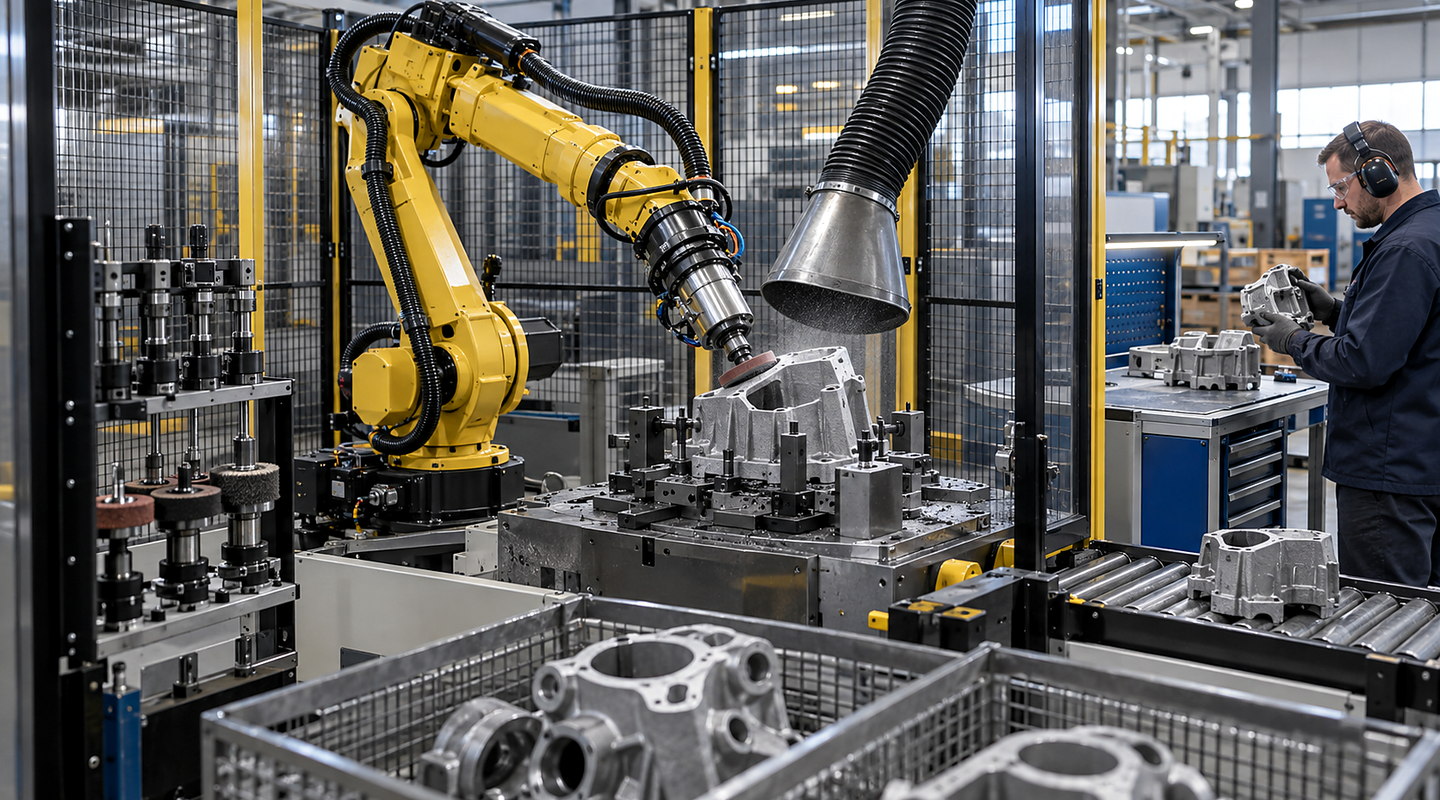
Use this practical checklist to describe your requirements for robotic sprue removal around representative parts, tooling and the complete process sequence, line connections and required results.
A useful specification for robotic sprue removal describes your operating range, line connections and required results while leaving room for the supplier to propose the best method.
Use this checklist for repeatable production using robotic sprue removal and handling and separate confirmed facts, realistic ranges and items that need a trial.
Plan robotic sprue removal around your parts, process, cycle time, tooling, recovery and acceptance criteria. Discuss the highest-risk feasibility questions with Oxford Industrial Automation. A clear brief should state the operating range for part, product and process variation for robotic sprue removal & handling and your requirements for run-off criteria and production evidence.
Discuss your application

State what the complete solution must achieve for repeatable production using robotic sprue removal and handling, including your production pattern and who will review the result.
Record normal and credible extremes for part, product and process variation for robotic sprue removal & handling, arrival pattern and presentation and required cycle and production pattern; avoid relying on one nominal value.
Define representative examples from repeatable production using robotic sprue removal and handling, the method, repetitions, acceptable range and result record so you and the supplier share the same expectation.
For robotic sprue removal, use “shall” only for a requirement that can be demonstrated. Keep preferences, assumptions, provisional line connections and future options clearly separate.
Your final robotic sprue removal scope must also account for operator access, recovery and changeover, run-off criteria and production evidence, current regulations and the conditions at your site.