In brief

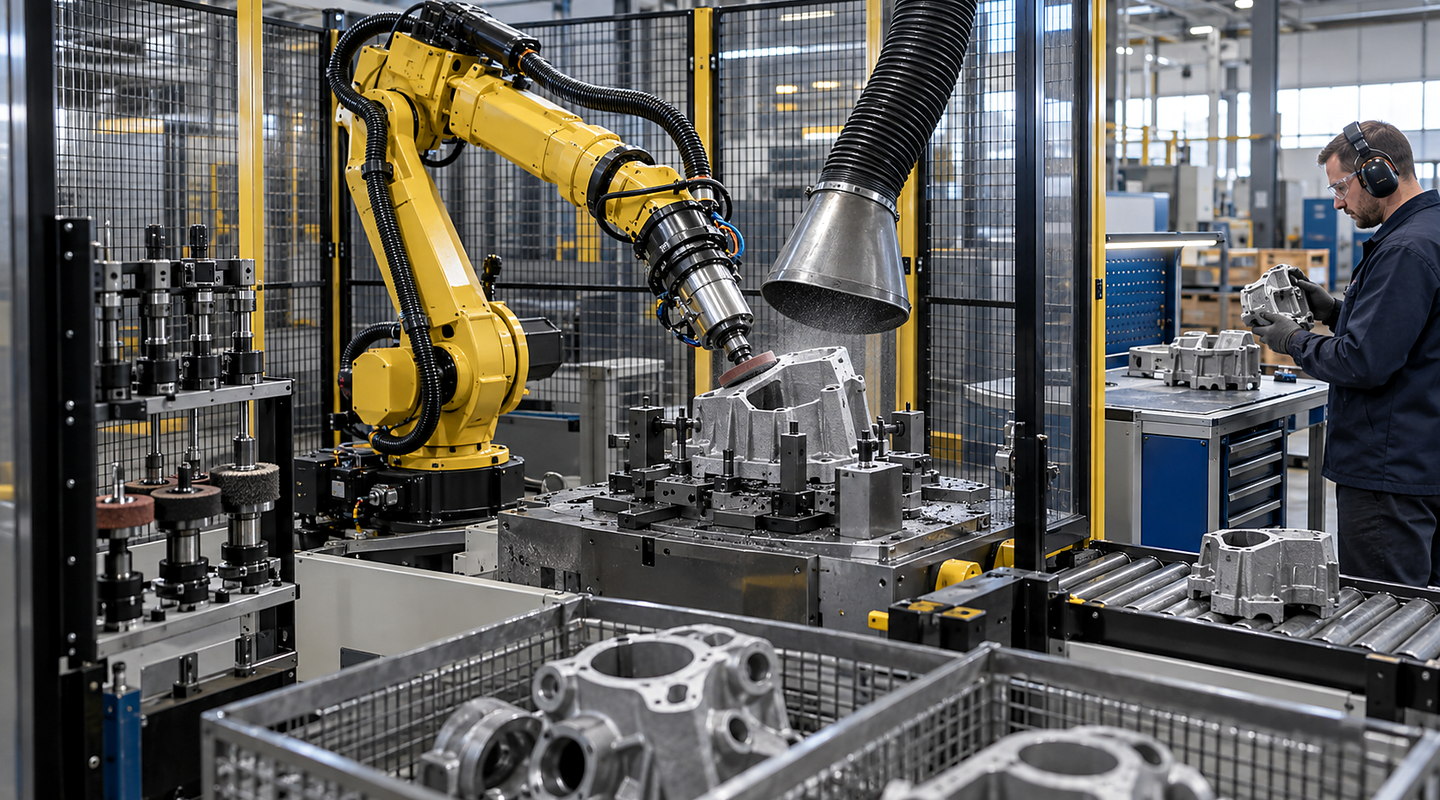
For repeatable sprue removal, assess identified mouldings across the intended cavities, material conditions and normal presentation range. Keep the support, tool setup and approved gate-finish reference with the results so each observation describes a defined production condition.

Review repeated cycles with both the retained component and removed material accounted for. The run-off guide helps distinguish successful separation from an accepted moulding and an unobstructed route for the next cycle.

On the production floor

Plan for the conditions your team handles every day — Robotic Sprue Removal

Plan robotic sprue removal around your parts, process, cycle time, tooling, recovery and acceptance criteria. Discuss the highest-risk feasibility questions with Oxford Industrial Automation. For repeatable production using robotic sprue removal and handling, the deciding details include part, product and process variation for robotic sprue removal & handling, required cycle and production pattern and run-off criteria and production evidence.

Discuss your application
Your application

Details worth resolving early for repeatable production using robotic sprue removal and handling

Question 1

Part, Product and Process Variation for Robotic Sprue Removal & Handling

Identify the cavity or variant, material condition and gate geometry represented by each sample. Include normal location variation and agreed near-limit finishes; record freshly moulded and cooled conditions separately when they differ from the intended removal point.

Question 2

Arrival Pattern and Presentation

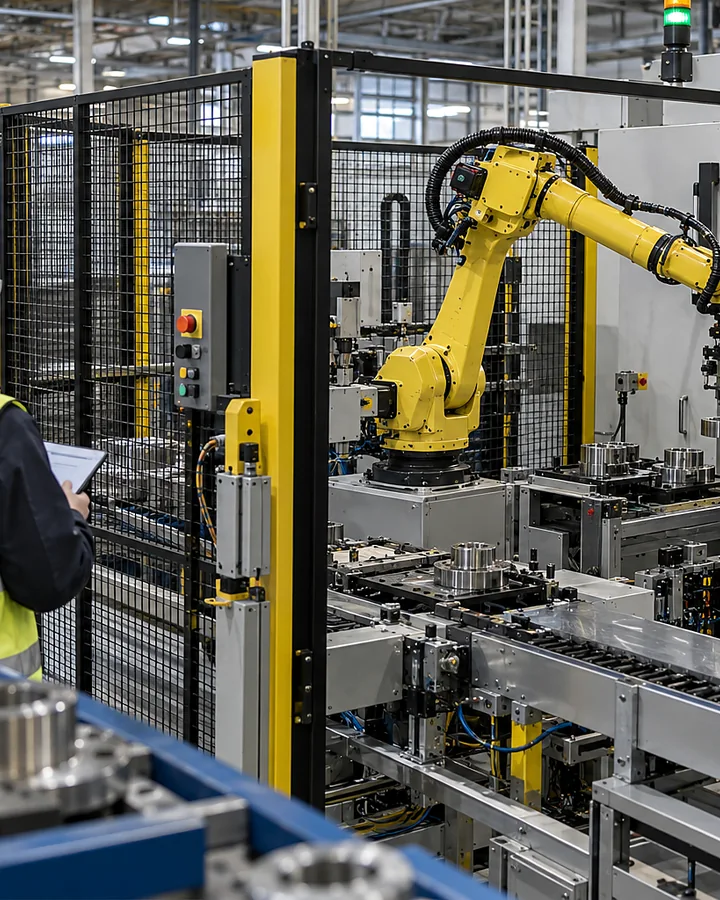
Record how mouldings arrive with their runners attached, the expected location range and the datum and surfaces used for holding. Check that the proposed support and tool access cover the presented range without relying on one perfectly seated sample.

Question 3

Required Cycle and Production Pattern

Include arrival, location, separation, inspection, part transfer and waste handling in the complete cycle. Record collection emptying, short stops and recovery separately so a short separation movement is not treated as production output.

Question 4

Tooling, Sensing and Process Interfaces

Define the proposed duties of handling, support, separation and inspection. Agree what evidence is needed for the finished gate and waste clearance, and which checks are repeated after tool replacement or adjustment; do not infer these functions from the robot layout.

Question 5

Operator Access, Recovery and Changeover

Record access for waste collection, tool inspection and setup changes. For incomplete separation, retained fragments or interrupted operation, agree an assessed hold, review and resumption procedure that establishes the part and tool condition before work continues.

Question 6

Run-Off Criteria and Production Evidence

Keep cavity or variant, material condition, support and tool setup with the observed gate finish, marks, distortion and waste result. State the examined range and unresolved cases, including any difference between the trial and intended production condition.

Your operating cycle

Plan for more than automatic running

Include replenishment, normal production, planned change, short stops, fault recovery, cleaning and maintenance for repeatable production using robotic sprue removal and handling. A fast automatic step can still leave your team with a slow or awkward overall process.

Prove the result

Test repeatable production using robotic sprue removal and handling against representative parts, tooling and difficult cycle conditions

Normal production

Run the agreed product or part mix for repeatable production using robotic sprue removal and handling at your intended operating pattern.

Difficult conditions

Include credible extremes for part, product and process variation for robotic sprue removal & handling and arrival pattern and presentation.

Fault and recovery

Agree an assessed review or trial for incomplete separation, a retained sprue, a full or obstructed waste route and an interrupted cut. Record the required indication, part disposition and resumption checks without assuming automatic detection or recovery.

Important limits

Be clear about what the trial has shown

Compare with Retrofit or Flexible Cells Involving Robotic Sprue Removal and Handling if that operating pattern is closer to your application.